

Why Buy Books Directly From Authors: A 2026 Guide
Table of Contents
- Why Buy Books Directly From Authors Matters
- Benefits of Buying Books Directly From Authors
- How to Support Independent Authors Through Direct Purchases
- Buy Signed Books From Authors: Exclusivity and Personal Connection
- Buy Books From Authors vs Bookstores: Which Option Serves You Best
- Building Reader Relationships Through Direct Sales
- Practical Steps to Find and Buy Directly From Authors
- Frequently Asked Questions
Last Updated: October 14, 2026
Why Buy Books Directly From Authors Matters
When you buy books directly from authors, it affects what you pay, what the author earns, and the connection you build. Direct purchases cut out the middlemen, so you support the author more directly and often get something you can't find elsewhere.
Authors now have real options beyond traditional publishing, and many sell directly to readers. At Echoes of Survival, our memoir by Jennifer Monticello is available directly through our catalog, letting readers support her work while gaining immediate access to her story of survival and resilience.

Benefits of Buying Books Directly From Authors
What Authors Earn From Direct Sales
When you buy from a bookstore, publishers, distributors, and retailers all take a cut before the author's percentage reaches them.
Direct sales change the math: no retailer margin, no distributor fee, and the author sets the price and keeps most of it.
Authors rely on sales to fund their next project, so higher earnings per book mean they can write more or invest in better editing and cover design.
What Readers Gain From Direct Purchases
Buying directly gives you access to editions you won't find elsewhere: signed copies, personalized inscriptions, and limited editions.
You also often get better customer service, since the author or their small team handles your order.
Many readers say buying directly feels better: you know where your money goes and you're supporting someone who poured months or years into the work.
How to Support Independent Authors Through Direct Purchases
A smooth direct purchase comes down to four things: where the author sells, how they take payment, how they fulfill, and how they handle taxes and international orders.
1. Find the author's official storefront
Most authors sell through one of a few common setups:
- A dedicated shop on their own website (often built with Shopify, WooCommerce, Squarespace, or similar). This is usually the most complete option, signed copies, bundles, and preorders tend to live here.
- A creator platform such as Gumroad, Payhip, Bookfunnel, or Ko-fi. These are popular for ebooks, audiobooks, and pay-what-you-want tiers.
- A print-on-demand integration (for example, Bookvault, IngramSpark's direct-to-reader option, or Amazon KDP's author copies used as a fulfillment source). These let authors ship physical books without holding inventory.
To confirm you're on the official channel, check that the author's website, newsletter, or verified social profile links to it. If a "signed copy" comes from an account you can't trace back to the author, treat it as a third-party reseller.
How to verify an author's official website and social profiles
2. Understand how payment is processed
Direct sales run through processors like Stripe, PayPal, Square, or the built-in processors in Shopify and Gumroad. Your card details go to the processor, and refunds and disputes go through the same processor. If a shop asks for a wire transfer, gift card, or peer-to-peer app with no buyer protection, that's a red flag.
3. Know how the book will be fulfilled
Fulfillment is where direct sales diverge most from retail. Three models are common:
- Author-fulfilled: the author packs and ships from home, often with a personal note, slower turnaround (3-10 business days), and shipping at actual postage.
- Print-on-demand (POD): a printer produces and ships each copy as orders come in, typically 3-7 business days plus shipping. Signed copies usually aren't available this way.
- Hybrid: the author signs bookplates or tip-in pages and ships them to a fulfillment partner, who inserts them into POD orders.
4. Plan for shipping, taxes, and international orders
- Domestic shipping is usually straightforward; US Media Mail is often cheapest for books but slow.
- International shipping is where costs spike, a paperback can cost more to ship overseas than the book itself, so many authors restrict international orders to ebooks and audiobooks or use a regional partner.
- Sales tax and VAT: US sellers collect sales tax by buyer's state once they cross economic nexus thresholds; in the EU and UK, VAT is typically collected at the point of sale. Reputable shops handle this automatically, but smaller ones may not, leading to customs charges on delivery.
5. A reader-focused checklist before you buy
- Is this the author's official store (linked from their site or verified profile)?
- Is the format clear, hardcover, paperback, ebook, audiobook, and DRM-free if that matters?
- Is the copy signed on the page or on a bookplate?
That last point matters: direct sales give authors your contact information, a big reason they prefer this channel.
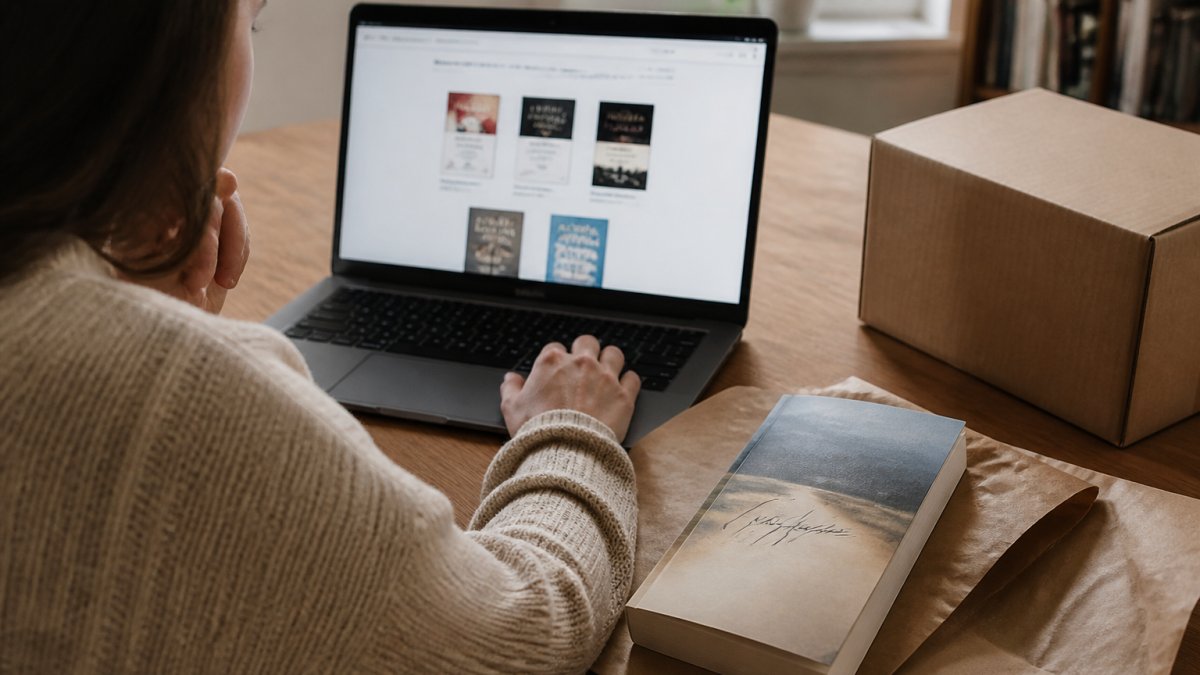
Each step is a place where a direct purchase can go better or worse than a retail one.
Buy Signed Books From Authors: Exclusivity and Personal Connection
A signed copy transforms a book into a keepsake, the author's handwriting makes it personal, a gift worth giving or a treasure worth keeping.
Signed editions often cost slightly more, a premium that pays for the author's time and the exclusivity. Limited quantities make them valuable, once they're gone, they're gone.
Our signed copy of Echoes of Survival, hand-signed by Jennifer Monticello, offers an individually signed keepsake for yourself or a gift for someone who needs to hear that a different life is possible.
Many readers buy signed copies as gifts for people navigating difficult seasons.
Buy Books From Authors vs Bookstores: Which Option Serves You Best
The honest answer to direct sales versus bookstores and online retailers is: it depends on what you're optimizing for. The three channels, author-direct, independent bookshop, and major online retailer, trade off differently on price, speed, selection, author earnings, and relationship.
What actually changes between channels
When you buy a book, the cover price is divided among several parties. The pattern is consistent:
- Author-direct: no retailer margin and no distributor cut. Payment processing and shipping come out of the author's side, but they still typically keep a larger share per copy than through any other channel.
- Independent bookshop: the shop buys at a wholesale discount (commonly 40-55% off cover for trade books) and sells at or near cover, so the publisher, distributor, and shop each take a share before the author's royalty is calculated.
- Major online retailer: discounts are common, and the retailer's cut plus marketplace fees come off the top. Self-published authors get the platform's royalty structure; traditionally published authors get the publisher's royalty rate applied to whatever the retailer paid.
A worked example (illustrative, not a quote)
Exact numbers vary by book, format, and contract, so treat this as a shape rather than a promise. Imagine a $20 paperback:
Signed Copy of Echoes of Survival →
- Author-direct, author-fulfilled: the author collects roughly $20, minus payment processing, postage (often $4-$6 domestically), and printing if using POD (commonly $3-$6). What's left is often a few dollars to low double digits per copy.
- Independent bookshop: the shop pays roughly $10-$11 for a $20 trade paperback, and the author's royalty is calculated on that wholesale price, not the $20 you paid, often a dollar or two per copy.
- Major online retailer: if the retailer discounts to $15, the author's royalty is calculated on the retailer's net, not the original cover.
The point isn't to memorize the math, but to see why authors care about direct sales, and why "buy direct" isn't automatically cheapest for you.
When direct purchase is the right choice
- You want a signed or limited edition, which usually exists only through the author's own shop.
- You want the author to keep the most per copy.
- You want a personal touch, a note, bookmark, bookplate, or bundle.
When direct purchase is not the best choice
- You need the book today or tomorrow. Author-direct shipping is usually slower than a major retailer or a local bookshop.
- You want to browse and compare. A bookshop lets you read the first page and check print quality in person; an author's shop shows one book at a time.
- You're buying several books at once. Five direct orders mean five shipping charges; one retailer or bookshop order is simpler and often cheaper.
A quick decision guide
| Your priority | Best channel |
|---|---|
| Signed or limited edition | Author-direct |
| Maximum author earnings | Author-direct |
| Fastest delivery | Major retailer or local bookshop |
| Lowest price | Major retailer |
| Browsing and discovery | Independent bookshop |
| Multiple books in one order | Retailer or bookshop |
| Library access | Library (with author royalties via lending) |
| Supporting local community | Independent bookshop |
Direct sales and retail serve different reader intentions. The reader who wants a signed memoir as a gift and the reader who wants a cheap paperback for a flight are not the same person, and the industry works better when both options exist.
Building Reader Relationships Through Direct Sales
These relationships compound: direct buyers often become loyal fans who preorder the next book, recommend the author to friends, and leave reviews on social media.
For authors, this feedback is invaluable, it shows what resonates, who their audience is, and what shapes their next project.
This transforms the reading experience: you're not just consuming content, you're supporting someone's creative vision and being supported in return through exclusive access and genuine connection.
Practical Steps to Find and Buy Directly From Authors
Step 1: Search for the author's official website or shop
Step 2: Look for author social media
Authors often link to their shop from Instagram, Twitter, or their author page.
Step 3: Check author websites for a "Shop" or "Books" page
Once on the author's site, look for navigation to their shop.
Step 4: Review what's available
See what editions they offer, signed copies, limited editions, bundles, and choose what fits.
Step 5: Check shipping costs and delivery time
Before checkout, confirm shipping costs and delivery time.
Step 6: Complete your purchase
Use the secure checkout; most author shops use standard payment processors.
Step 7: Wait and enjoy
Track your package if tracking is provided.
Frequently Asked Questions
Why should you buy books directly from authors instead of using other retailers?
When you buy books directly from authors, a significantly higher percentage of your purchase goes to the writer. Authors selling direct keep most or all of the profit per book, compared to the 8-25% royalty they typically earn through bookstores or online retailers. Direct purchases also let you build a relationship with the author, access signed copies, and often receive exclusive content or personalized messages. For readers who want their money to genuinely support the creator, direct sales are the most impactful choice.
Do authors make more money when you buy their books directly?
Yes. When you buy directly from an author, they earn substantially more per sale. For example, a signed copy purchased directly generates far greater profit for the author than the same book sold through a bookstore, which takes a percentage cut. Authors also avoid distributor fees and retailer commissions when handling sales themselves. This is why many indie authors and self-published writers prioritize direct sales, the profit margin is significantly higher, allowing them to sustain their writing career and fund future projects.
Are books bought directly from authors always signed?
Not always, but many authors offer signed copies as a special option when you buy directly. Signed editions are often limited in quantity, making them more exclusive and valuable. For example, the signed copy of Echoes of Survival is hand-signed by Jennifer Monticello and serves as a meaningful keepsake. Always check the product listing to confirm whether a direct purchase includes a signature or if signed copies are available as a separate option. This personal touch is one reason readers choose to buy directly from authors.
Is it better to buy a book from the author or a bookstore?
It depends on your priorities. Buying directly from the author maximizes what the writer earns, often gives you access to signed copies, and builds your connection with the creator. However, bookstores offer convenience and browsing experience that some readers prefer. Bookstores also provide discoverability if you're browsing for new titles. If supporting the author financially is your main goal, buy direct. If you value retail convenience and selection, traditional retailers may suit you better. Many readers use both depending on the situation.